


Updated November 2026: we’ve updated where to find each item in Stash today (zoning, minimum lot size, feasibility and mailing owners) and clarified how Victoria handles minimum lot sizes.
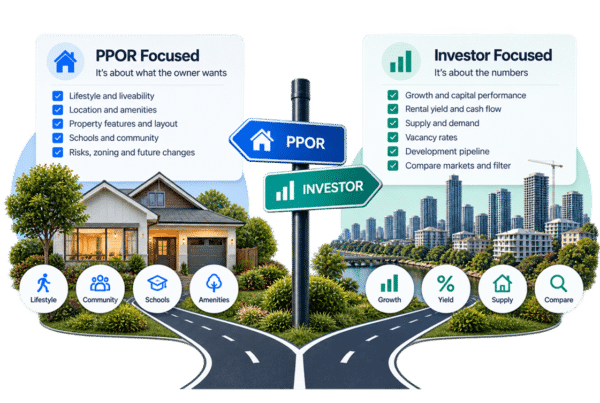
Where do you fall on the scale from new or experienced Property Investor?
Whether you’re trialling, newly subscribed to Stash, or have dabbled in property for some time, we’re revisiting the basics!
Check your knowledge of the below topics and if you are unsure about any of the core foundations, reach out to our service team.
We’re here to help, and the Stash Help Centre has step-by-step guides for every feature.
Do you know the basics of property investment?
To get the most from the Stash Property Research Platform, establish your core understanding of the below key property concepts.

The basics of property investment:
Ensure you check & understand:
- Different types of area zones
- Knowing the area zones is one important factor to be considered in property development which gives an idea on what each zoning code means in the area and may also impact the future appeal of the property to be developed. There are also some zoning restrictions to be taken into consideration along the way. In Stash, open Layers and switch on the Zoning overlay, then use the Zoning Legend to read the colours. For a single property, the Planning Insights tab shows its zone. See View zoning.
- Different types of developments that can be actioned within area zones
- This provides you insight into what you can develop on a certain area depending on what zone that area belongs to. The development of a property varies by area and depends on the zoning regulation which is usually developed as a zoning ordinance.
- The minimum lot sizes in the city you’re interested in
- Along with area zones, minimum lot size also gives you an idea what type of developments can take place within a particular area. This is state and council dependent. Victoria, for example, has no statewide minimum lot size; a minimum is only set in some zone schedules, and council still assesses each subdivision (see what’s the difference between a splitter and a subdivision). In Stash, the minimum lot size is on the property’s Planning Insights tab in the Planning & Development Potential card.
- The minimum lot size for the land you’re considering
- Gives you an insight into what the land can be used for such as what size dwelling/s. In Stash, click VIEW PLANNING INFO on the Property Details tab for the zoning, minimum lot details, height controls and links to the council sources. See Minimum lot size and zoning details.
- Typical types of property development
- Understanding the minimum lots sizes and required area zone for a subdivision, duplex or multi-unit build for example, helps you to search for suitable sites with Search all properties and check them on aerial imagery in Stash. Once you understand this and identify properties that suit, you can then ensure you are utilising the land to its most profitability potential.
- How to calculate what type of property investment would be the most profitable
- This can be done with the help of running a feasibility study as well as other necessary information or further research conducted. In Stash, open a property’s Due Diligence tab and click Create new feasibility; the calculator works out total cost, net profit and profit on cost as you type. See Run a feasibility study. If you are unsure what values to enter, reach out to our team for assistance.
- How to progress an opportunity once you’ve found a potential property
- Once all necessary information is gathered and requirements were set and approved, you’re now ready to reach out to property owners for further negotiation, which you can do by printing letters to owners or sending them through the Stash mailhouse. See Print letters to owners and Mail out letters.
Aerial Maps vs Satellite Maps

Have you used Aerial Maps as opposed to Satellite imagery to help find properties before they hit the market?
Check out the quick read blog ‘Using Aerial Maps: A guide to finding off-market property opportunities’.
Know the basics, but still can’t find something you’re looking for in Stash Property?
We’re here to provide affordable property research tools that make your dreams possible.
If you can’t find something you’re looking for – just ask and let us know!
Our tech team is always updating the Stash Property Platform, with the best new functionality sourced from ideas from our subscribers, so keep sending in your ideas and you may just see them go live!
Email us now at learn@stashproperty.com.au to let us know what we can improve on.
Happy Stashing