
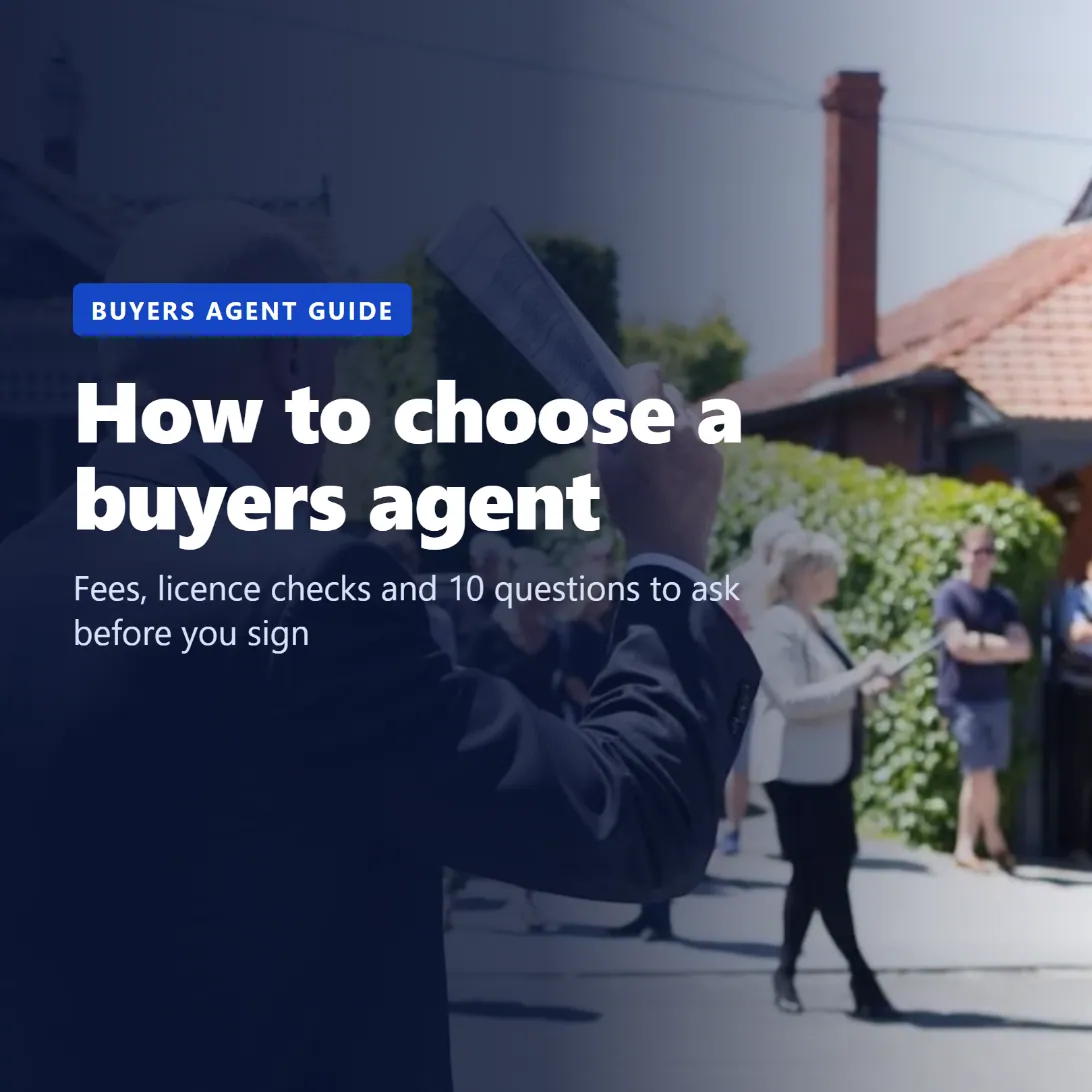
A good buyers agent can save you time, money and a lot of stress. A poor one can cost you all three. This guide covers what a buyers agent does, how they charge, how to check they're licensed, and the questions that separate the good ones from the rest.
What does a buyers agent do?
A buyers agent (called a buyer's advocate in Victoria) works for the buyer, not the seller. Depending on the service you choose, they will:
- help you turn your goals and budget into a clear brief
- research and shortlist suburbs that fit your strategy
- find properties on the market, before they're listed and off-market
- do the due diligence: sales history, comparable sales, planning, flood and other risks
- negotiate the price or bid for you at auction
- manage the process through to settlement
Some agents offer the full service. Others offer just one part, such as negotiation or auction bidding.
How much does a buyers agent cost?
Buyers agents usually charge in one of three ways:
- Percentage of the purchase price: commonly about 1.5% to 3% plus GST, depending on the market and the service.
- Fixed fee: a flat amount agreed upfront. For a full service in the capital cities this is often somewhere between $10,000 and $30,000 plus GST.
- Tiered fixed fee: a set fee for each price bracket, for example one fee up to $1.2 million and a higher fee above that.
Many agents also charge an upfront engagement fee that comes off the final fee. Partial services like auction bidding cost less. Always get the full fee schedule in writing, including what happens if you don't end up buying.
Fixed or percentage? A fixed fee means your agent earns the same whatever price you pay, so there's no incentive to push you higher. A percentage fee scales with the purchase price. Neither is wrong, but you should know which one you're agreeing to.
Check they're licensed
Buyers agents have to be licensed or registered under the real estate laws of each state and territory. In most states it's the same real estate licence a selling agent holds, used to act for buyers. Before you sign anything, look up their name or licence number on the public register of the state regulator, for example NSW Fair Trading, Consumer Affairs Victoria or Queensland's Office of Fair Trading.
Membership of an industry body such as the Real Estate Buyers Agents Association of Australia (REBAA) is a plus, but it doesn't replace a licence.
10 questions to ask before you sign
- How do you charge, what's included, and what do I pay if I don't buy?
- Do you receive any payment from sellers, selling agents, developers or anyone else? (The answer should be no.)
- How many properties have you bought in my target areas in the last 12 months?
- How do you find properties that aren't on the portals?
- What due diligence do you do on each property, and will I get it in writing?
- How do you work out what a property is worth before you negotiate?
- Who will actually do the work: you, or a junior member of the team?
- How often will you update me, and how?
- Can I speak to two or three recent clients?
- Can I see the engagement agreement before I commit?
Red flags
- Payments from the other side. Avoid agents who take commissions from sellers or developers. Their job is to act for you.
- Selling stock they have an interest in. Be wary if you're steered towards off-the-plan projects or a particular developer.
- Vague fees. If the fee schedule isn't clear in writing, walk away.
- Guaranteed growth. Nobody can promise what a property will be worth.
- No local track record. Experience in the suburbs you're targeting matters.
What good buyers agents use
The best buyers agents back their advice with data. Expect to see a structured brief, suburb research, comparable sales to support the price, and a written report covering the property's risks. Many use tools like Stash to research markets, assess properties and share findings with their clients in one place.
Find a buyers agent
Looking for a buyers agent in your area? The Stash Buyers Agent Directory lists agents across Australia, so you can compare who works in the suburbs you're targeting.
This article is general information only. Fees and licensing rules change, so check the current requirements with your state regulator and get any agreement reviewed before you sign.